
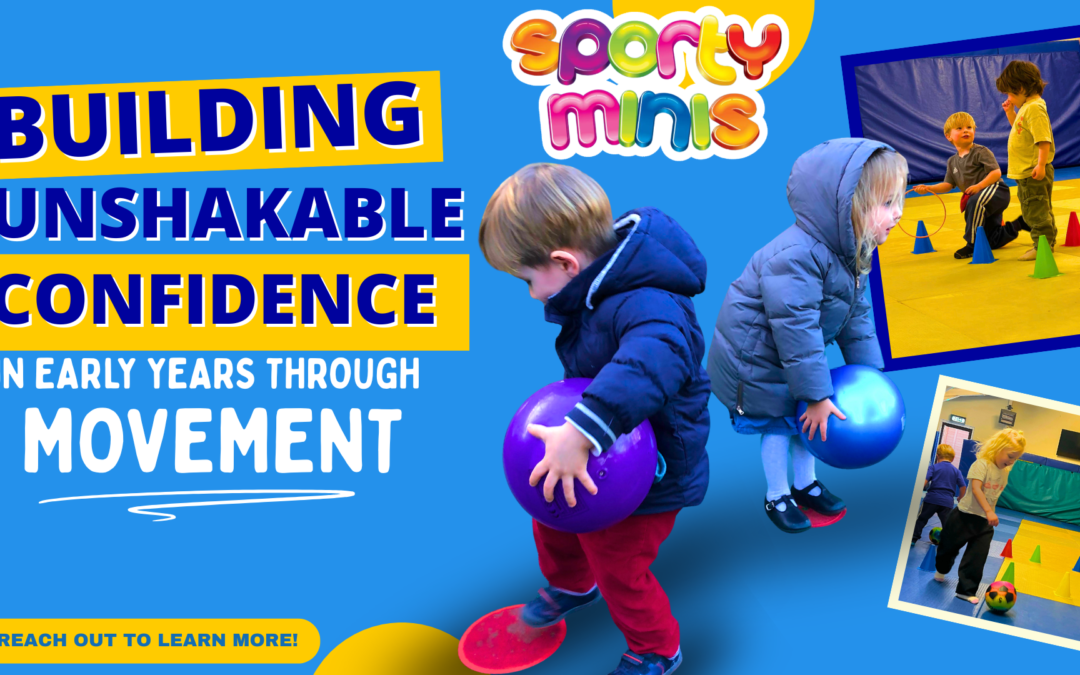
How intentional physical education helps children grow into capable, confident learners
At SportyMinis, confidence sits at the heart of everything we do. Since 2014, our work in early years settings across the UK has been guided by one clear belief: when children feel confident in their bodies, they feel more confident in themselves.
Confidence in the early years is not about being the loudest, the fastest, or the strongest. It is about children believing that they can try, that mistakes are part of learning, and that their efforts matter. Through structured, developmentally appropriate movement, SportyMinis supports children aged 2 to 5 to build that belief in a way that feels natural, joyful, and achievable.
As nurseries continue to prioritise holistic development and prepare children for the demands of school and life beyond, physical education plays a far more significant role than it is often given credit for. Purposeful movement does not sit separately from learning. It strengthens it.
Confidence Is Built, Not Taught
At SportyMinis, we do not tell children to be confident. We create the conditions where confidence can grow.
Every session is designed around the understanding that confidence develops through positive experiences, repetition, and success at the right level. Children gain confidence when they feel capable, when challenges are achievable, and when effort is recognised.
Our coaches are trained to meet children where they are developmentally. Using adaptable delivery and child centred coaching, activities are shaped so that every child can take part, regardless of prior experience or ability. This approach removes pressure and comparison, replacing it with encouragement and personal progress.
A child balancing for two seconds longer than last week, catching a ball for the first time, or choosing to join a group activity after initially watching from the side are all moments that matter. These small wins form the building blocks of self belief.
The Role of Small Wins in Early Confidence
One of the most powerful aspects of our sessions is the emphasis on small, meaningful successes.
Young children thrive when progress feels visible and achievable. SportyMinis sessions are intentionally structured so that skills are broken down into manageable steps. Success is not measured against others but against a child’s own starting point.
Verbal praise, positive reinforcement, and shared celebration help children recognise their own progress. Over time, this repeated experience of success shapes how children see themselves. They begin to approach new challenges with curiosity rather than hesitation.
We regularly hear from early years practitioners and parents who notice changes beyond the session itself. Children who were once reluctant to participate begin to volunteer. Those who struggled with transitions show greater emotional regulation. Confidence gained through movement often carries into communication, social interaction, and learning behaviours.
A Structured Approach Rooted in Physical Literacy
SportyMinis sessions are built around the development of fundamental movement skills, with a particular focus on agility, balance, and coordination. These core components form the foundation of physical literacy and underpin a child’s ability to move confidently and competently.
Our curriculum supports the development of 21 fundamental movement skills through progressive, age appropriate activities. For younger children, this may involve crawling, rolling, climbing, and walking in imaginative environments. For older children, skills become more complex, introducing jumping, hopping, throwing, catching, and controlled movement sequences.
Progression is key. Children are challenged appropriately without being overwhelmed. This balance supports motivation, engagement, and confidence while reducing frustration and anxiety.
Learning Through Play and Imagination
Movement at SportyMinis is never delivered as drills or rigid instruction. Play and imagination are central to how children learn.
Story driven activities encourage children to move with purpose while removing fear of failure. Children might pretend to cross a river, travel through space, or move like animals. These playful contexts invite creativity and exploration, allowing children to experiment with movement without pressure.
Imaginative play also supports independence. When children are encouraged to interpret a movement in their own way, they begin to take ownership of their learning. This autonomy is closely linked to confidence and motivation in the early years.
Building Social Confidence Through Shared Movement
Confidence is not only individual. It is social.
Group activities within SportyMinis sessions are designed to promote cooperation, communication, and empathy. Team games, partner tasks, and shared challenges encourage children to support one another and experience success together.
For children who are quieter or more reserved, this environment offers a safe way to engage socially. Cheering peers, taking turns, and working towards a shared goal all help children feel a sense of belonging. Social confidence often grows alongside physical confidence, reinforcing positive relationships within the setting.
Supporting Emotional Expression and Regulation
Movement is a powerful outlet for emotional expression, particularly for young children who may not yet have the language to explain how they feel.
Through active play, calming activities, and moments of reflection, SportyMinis sessions support emotional regulation and self awareness. Children learn how movement can help them release energy, manage frustration, or find calm.
This connection between physical activity and emotional wellbeing is especially valuable in early years environments, where supporting self regulation is a key part of development and school readiness.
Confidence That Extends Beyond Physical Education
The benefits of confidence built through SportyMinis extend far beyond physical development.
Children who feel confident in their bodies are often more willing to participate in learning, communicate with peers, and approach new experiences with resilience. Practitioners frequently report improvements in focus, listening skills, and engagement following regular SportyMinis sessions.
From an EYFS perspective, this confidence supports multiple areas of learning including personal, social and emotional development, communication and language, and physical development. For settings, this provides meaningful, observable evidence of progress.
Preparing Children for School and Life
As expectations around school readiness continue to grow, confidence plays a critical role in how children adapt to new environments.
Children who trust their abilities, feel comfortable trying new things, and can manage emotions are better equipped to navigate transitions. SportyMinis supports this readiness by giving children repeated opportunities to succeed, persevere, and grow through movement.
The long term impact goes further. By fostering positive relationships with physical activity early, children are more likely to remain active as they grow. This supports not only physical health but also mental wellbeing and lifelong resilience.
Why SportyMinis
At SportyMinis, we believe movement is one of the most powerful tools for building confident, capable children. Our structured, playful approach supports early years settings in delivering high quality physical education that makes development visible and meaningful.
Confidence is not built in a single session. It grows through consistent, thoughtful experiences that respect each child’s individual journey. That is what SportyMinis delivers, every session, in every setting.
Ready to bring confidence building movement into your setting?
If you would like to explore how SportyMinis can support your children’s physical, social, and emotional development, we invite you to complete the enquiry form on our website. A member of our team will be in touch to discuss how we can support your nursery or early years setting.
I was skeptical at first but the deposit options here are incredibly easy to manage. Everything runs so smoothly that I forget I am watching a live stream. The team behind the scenes seems to genuinely care about fair play since the odds stay transparent throughout the match. I have recommended this spot to all my friends who love weekend games. id77dragon